
About
We
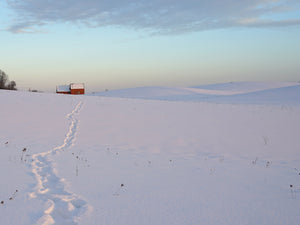
We are BEANINGFUL - a bean-to-bar chocolate manufactory located amidst the hills of Alanta...
Our chocolates were born from a great love for the flavor journeys of chocolate. Therefore, we strive to capture the best qualities of cocoa in each bar, fragments of taste memories - childhood recollections, moments of passionate love, rays of African sun, the clarity of the Andes mountains, never-ending green jungles... And together, to enjoy the flavors of the Baltic countries gifted by nature.
Photo: Beaningful
OUR VALUES
We are small, but we feel a great responsibility for ourselves and those around us. Therefore, we believe that we can achieve the highest quality only by creating a transparent community based on trust and knowledge sharing, which includes not only the manufacturer and the buyer, but also raw material growers, enthusiasts, and other manufacturers with whom we share news and discoveries.
For us, the cocoa bean is the core of the entire flavour journey, and how and what we produce is meaningful. Therefore, we use only the highest quality raw materials for production. We are confident that only the highest quality beans reach our door every time, and their growers receive a fair reward and can afford to focus on the quality of the beans,
land conservation, and the creation of local community well-being. When making flavoured chocolates, we use products grown in Lithuanian farms, promoting the survival of local farms, and we meticulously collect wild edibles growing in Lithuanian forests ourselves.
We invite you to taste mindfully and joyfully. For us, each chocolate is a separate story, a fragment of memory aroused, a continuation of a flavour journey. With each piece of chocolate, we invite you to be part of this journey - to participate, to create a story for yourself and those around you.
TEAM
Our team consists of Justinas, Ieva, and Marija. We are united by a curious outlook on the world, where less is more, and slow, quality experiences allow us to enjoy and truly "feel" nature's gifts.
our cocoa
PERU URUBAMBA
This floral, fragrant organic cacao grows in the Andes Mountains of Peru, on small farms in the Urubamba River valleys, from which the cacao is purchased by the Alto Urubamba cooperative.
The cacao grown here is truly rare. Relatively small fruits grow on old and strong cacao trees, some of which are 200 years old. The cacao beans are also small, but they are rich in flavors and aromas. For a long time, this variety of beans was thought to be extinct, but it was recently rediscovered and recognized as the most aromatic cacao in the world.
Photo: Beaningful
Uganda's Semuliki Forest
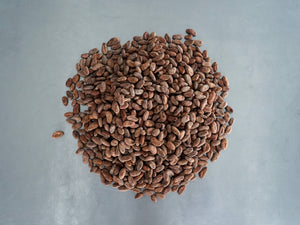
In Western Uganda, in the Bundibugyo district, which borders the Democratic Republic of Congo on one side and is surrounded by the magnificent Rwenzori Mountains and Semuliki National Forest on the other, cocoa trees grow among bananas, plantains, palm trees, and coffee plants.
Semuliki Forest cocoa is grown on small organic farms, numbering around 3400, with women making up 52% of the farm owners. Latitude, the company responsible for cocoa processing and export, is a registered B Corp that purchases high-quality fresh cocoa and pays growers 20% more than other buyers in Uganda.
Photo: Crafting Markets
EL SALVADOR LA CARRERA
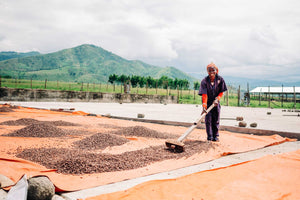
Indian Idukki organic cacao grows in the Western Ghats mountain range. This mountain range, older than the Himalayas themselves, forms a distinctive monsoon climate. Due to the extraordinarily rich diversity of flora and fauna, this place is considered one of the eight hottest biodiversity hotspots in the world, providing refuge for at least 325 rapidly disappearing animals: Asian elephants, lion-tailed macaques, sloth bears, and others.
The variety of crops grown in the farms of this region is also astonishing. Tall coconut palms grow alongside mangoes, papayas, cardamom, and nutmeg trees, while pepper vines and cacao trees intertwine nearby.
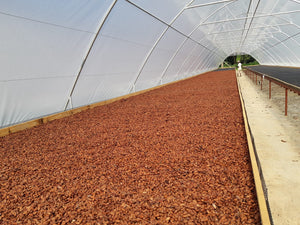
A significant contribution to ensuring we always receive the highest quality cacao is made by the GoGround team, which manages the cacao sourcing, fermentation, and sales chains. GoGround supports farmers to grow the highest quality cacao. Every week, the GoGround team visits even the smallest farms, and pays fair prices for the premium cacao grown. By purchasing cacao from farmers, they ensure weekly payments, providing them with stable income, while the other party – the buyers – receive only the freshest cacao, which immediately goes to the GoGround fermentation station. Here, cacao is fermented for five days in wooden boxes covered with jute sacks, then transferred to drying tables. The drying process is also continuously monitored – the cacao beans are stirred until they reach the appropriate moisture level, then sorted and packed for shipment.
Photo: Silva Cacao

PHILIPPINES PAQUIBATO
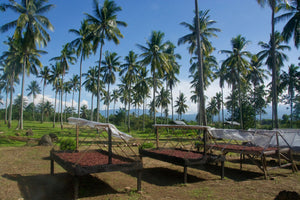
The cacao from the Paquibato village in the Davao region of the Philippines grows in the shade of forest trees and coconut palms, at the fertile foot of a mountain. Once the cacao fruits ripen, the pods are split open, the seeds and pulp are extracted, and on the same day, they are transported to a centralized fermentation station. The cacao is fermented for five to six days in wooden, three-tiered cascade boxes. The fermented beans are then moved to drying tables, where they are mixed and monitored until they reach the appropriate moisture level. After that, the beans are sorted and packaged for shipment.
Cacao arrived in the Philippines in 1670, earlier than anywhere else in Asia. And a significant amount of cacao was cultivated here. However, due to pests, diseases, large monoculture farms of palms and bananas, and aging cacao trees, cacao production significantly decreased. Founded in 2015, the chocolate makers Auro joined forces to revive Filipino cacao and strive for the highest quality. Visiting farmers, they share knowledge about organic farming, harvesting subtleties, and pest and disease control. The result is worth the consistent effort – in 2019, at the International Cocoa Awards (ICA), these beans were recognized among the top 20 best beans in the world.
Photo: Silva Cacao
DOMINICAN REPUBLIC ECO – CARIBE
Öko-Caribe (or "eco-Caribe" in German), located in the cacao-rich Duarte region of the Dominican Republic, is a highly regarded cocoa producer. The Dominican Republic itself is well-known in the cacao world as a pioneer of organic cacao, while Öko-Caribe leads the country and is highly valued for its impeccable quality and excellent taste. In 2020, Öko invested in more extensive cacao fermentation and drying equipment to serve the growing market for specialty chocolate.
The cocoa stands out with its delicate nutty and honey flavour.
Photo: Crafting Markets
FLAVOURED CHOCOLATES
Just as cocoa from different regions offers a multitude of subtle aftertastes and aromas, so too are the flavours of our Baltic region an inexhaustible source for experimentation. These flavours connect with memories, fragments of celebrations, or experiences reminiscent of childhood – things that are important and inherent to us.
We won't tell you about mangoes in more detail than Indians, but we can talk about apples. We know the varieties that have grown in our region since ancient times; we can recognise a ripe, juicy apple on a branch; our grandparents will advise us which ones are best for juicing, which ones for drying, and which ones for making apple cheese. Therefore, we choose to create from what grows around us and what our parents passed down to us as essential gastronomic rituals.
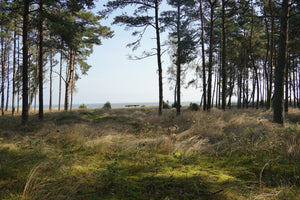
We are a nation of gatherers to the core. The forest for us is not only a space of aesthetic sensations but also a school. We start picking berries before we even learn to speak. From an early age, information is passed down through generations about which berries or mushrooms we can eat and which ones are better left untouched. Which forest delicacies are better with meat and which with fish. Berries and mushrooms saved Lithuanians from starvation in our region and in Siberia; those same berries and mushrooms were on both daily and festive tables.
And we know from our parents and grandparents that these natural gifts, gracing our tables, are not just a label, but an identity connecting generations. A unique, extraordinary world, full of memories and sensations, which we want to share with others.
Photo: Beaningful
DAMAGED PACKAGING
Our inner chocolate packaging is not plastic. It is a product made from cellulose, derived from responsibly grown wood. This material naturally decomposes through home or industrial composting, so ideally it should end up in compost. If you cannot dispose of this packaging in compost, discard it with mixed waste.
Do not confuse it with plastic!
And please recycle :)